A Dream Team of Finance
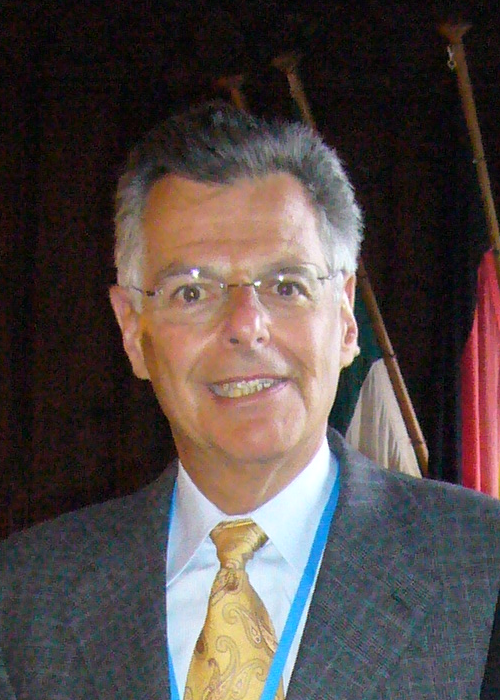
Long-Term Capital Management was founded in 1994 by John Meriwether, a legendary bond trader who had built the enormously profitable Arbitrage Group at Salomon Brothers during the 1980s. Meriwether's reputation had survived a Treasury bond-bidding scandal that forced his departure from Salomon in 1991, and he attracted a roster of talent unlike anything the hedge fund world had seen. The founding partners included Myron Scholes and Robert C. Merton, who would share the 1997 Nobel Memorial Prize in Economic Sciences for their work on options pricing theory. David Mullins — formerly the vice chairman of the Federal Reserve Board — also joined as a principal.
LTCM launched with $1.25 billion in capital — at the time, the largest initial fund-raising in hedge fund history. Meriwether charged investors a 2 percent management fee and 25 percent of profits, above the standard hedge fund terms of the era. Minimum investment: $10 million, with a three-year lock-up during which investors could not withdraw. Major investors included Merrill Lynch, the University of Pittsburgh endowment, the Bank of Italy, and numerous wealthy individuals. Competition for the privilege of placing capital with the firm was fierce.
Convergence and Relative Value
LTCM's core strategy was relative value arbitrage — identifying small pricing discrepancies between related securities and betting that these discrepancies would narrow over time. Its traders focused primarily on fixed-income markets, exploiting the spread between on-the-run Treasury bonds (the most recently issued and therefore most liquid) and off-the-run bonds (older issues that were slightly less liquid but otherwise nearly identical). These spreads were tiny — often just a few basis points — but LTCM amplified them through massive leverage.
The firm also traded mortgage-backed securities spreads, European government bond convergence plays driven by the approaching launch of the euro, interest rate swap spreads, and equity volatility positions. In every case the underlying logic was consistent: markets contained small inefficiencies that would correct over time, and a sufficiently patient, well-capitalized investor could harvest these corrections reliably.
Mathematical models guided the trading — sophisticated extensions of the Black-Scholes framework that relied on historical correlations between asset classes, probability distributions of price movements, and the assumption that markets would revert to equilibrium relationships over the medium term. Elegant in theory, and for the first several years, spectacularly successful in practice.
Golden Years
LTCM's early returns were stunning. In 1994, the fund returned 20 percent net of fees. In 1995, 43 percent. In 1996, 41 percent. These numbers were all the more impressive for a strategy that was supposed to be low-risk — the returns reflected the enormous leverage the fund employed to magnify small pricing discrepancies into outsized profits.
By the end of 1997, LTCM's capital had grown to $7 billion and the fund controlled a portfolio of approximately $125 billion in assets — a leverage ratio of roughly 25 to 1. But this figure understated the true risk. Off-balance-sheet derivative positions carried a notional value exceeding $1.25 trillion. The total risk exposure dwarfed the capital base by a factor that made even experienced Wall Street risk managers uneasy Lowenstein (2000).
Ironically, the fund's very success planted the seeds of its destruction. By late 1997, LTCM's partners concluded that the fund had grown too large relative to the opportunities available and returned $2.7 billion to outside investors, reducing capital to $4.7 billion while maintaining the same portfolio size. The leverage ratio rose accordingly — from roughly 25:1 to approximately 28:1 on the balance sheet alone. In effect, the partners were concentrating risk at precisely the moment when markets were about to turn against them.
Russia Defaults, and the World Panics
On August 17, 1998, the Russian government defaulted on its domestic ruble-denominated debt and devalued the ruble. The default itself was not a major direct exposure for LTCM, but the secondary effects were catastrophic.
A global flight to quality erupted with an intensity that no model had anticipated. Investors worldwide rushed to sell risky assets — emerging market bonds, corporate debt, mortgage-backed securities — and buy the safest instruments available: US Treasury bonds. Every spread that LTCM had bet would narrow instead blew out to levels the fund's models considered virtually impossible. On-the-run versus off-the-run Treasury spreads, which had historically averaged about 10 basis points, widened to more than 30. Swap spreads, corporate bond spreads, and mortgage spreads all moved violently against the fund's positions at once.
The Asian financial crisis had already been destabilizing global markets since mid-1997, and Russia's default transformed regional stress into worldwide panic. Correlations between asset classes — which LTCM's models had assumed would remain low or negative — spiked toward one. Diversification, the foundation of modern portfolio theory, ceased to function. As one market participant later put it, in a crisis the only thing that goes up is correlation.
Into the Spiral
In August 1998 alone, LTCM lost $1.85 billion — roughly 45 percent of its remaining capital. On August 21, a single day wiped out $553 million. September brought further losses. By mid-September, capital had fallen to approximately $600 million, while balance sheet assets still exceeded $100 billion — an effective leverage ratio of roughly 167 to 1.
Losses fed on themselves. As LTCM's capital shrank, the fund was forced to reduce positions to meet margin calls from its counterparties. Selling into a panicked market drove prices further against the fund's remaining positions, triggering more margin calls and more forced selling — a vicious cycle that risk managers call a "doom loop." Other funds holding similar positions — and many did, having been inspired by LTCM's early success — were also liquidating, amplifying the downward pressure.
| Date | Event | Capital Impact |
|---|---|---|
| Aug 17, 1998 | Russia defaults on domestic debt | Trigger event |
| Aug 21, 1998 | LTCM loses $553 million in a single day | Capital falls below $3 billion |
| Aug 31, 1998 | Monthly loss reaches $1.85 billion | Capital at ~$2.3 billion |
| Sep 2, 1998 | Meriwether letter to investors seeking capital | No commitments secured |
| Sep 18, 1998 | Capital falls below $1 billion | Effective leverage exceeds 100:1 |
| Sep 22, 1998 | Fed-orchestrated consortium intervenes | Capital at ~$400 million |
| Sep 23, 1998 | 14 banks inject $3.65 billion | LTCM partners diluted to 10% |
What made this especially painful was that LTCM's trades were not wrong in the long run — most of the convergence bets did eventually prove correct. The problem was survival. The fund could not last long enough for the trades to work. As Keynes famously cautioned, "The market can remain irrational longer than you can remain solvent." LTCM's extreme leverage left no margin for error, and the magnitude of the short-term moves vastly exceeded what the Value-at-Risk models predicted was possible.
Fourteen Banks, One Weekend
By late September 1998, LTCM's impending collapse posed a threat to the entire financial system. The fund had derivative contracts with virtually every major financial institution on Wall Street, and a disorderly liquidation of its $100 billion-plus portfolio would have forced fire sales across global markets — potentially triggering a chain reaction of failures among the largest banks and investment houses in the world.
William McDonough, president of the Federal Reserve Bank of New York, convened an emergency meeting on September 22 at the New York Fed's offices on Liberty Street. Representatives of the major Wall Street firms gathered around the table — Goldman Sachs, Merrill Lynch, JPMorgan, Morgan Stanley, Salomon Smith Barney, Lehman Brothers, Bear Stearns, Chase Manhattan, Bankers Trust, Credit Suisse First Boston, Deutsche Bank, UBS, Barclays, and Societe Generale Edwards (1999).
After intense negotiations that lasted through the night, a consortium of 14 financial institutions agreed to inject $3.65 billion into LTCM in exchange for 90 percent ownership of the fund. Meriwether, Scholes, Merton, and the other existing partners saw their stakes diluted to just 10 percent. The consortium would manage an orderly liquidation of the portfolio over time, allowing positions to mature rather than being dumped into a panicked market.
Notably, the Federal Reserve committed no public funds. McDonough's role was that of convener and facilitator — using the moral authority of the central bank to bring the parties together and prevent a collective action problem in which each firm might have preferred to let others bear the cost of stabilization. Some critics argued that even this degree of Fed involvement constituted a dangerous precedent, signaling that firms deemed systemically important would be protected from the consequences of their risk-taking. That concern would prove prescient when the 2008 financial crisis unfolded a decade later.
Systemic Risk and the Lessons That Went Unlearned
LTCM's collapse exposed fundamental weaknesses in the architecture of global financial markets. The fund had borrowed from and entered into derivative contracts with dozens of counterparties, none of whom had a complete picture of LTCM's total exposure. Each bank knew its own relationship with the fund but not the aggregate risk LTCM posed to the system. This opacity — the inability of any single regulator or market participant to see the full web of interconnections — was a defining feature of pre-crisis financial markets, and the crisis did little to correct it.
The President's Working Group on Financial Markets, led by Treasury Secretary Robert Rubin and including Federal Reserve Chairman Alan Greenspan, published a report on the LTCM episode in April 1999. It recommended improved risk management practices, greater transparency from hedge funds to their creditors, and better regulatory oversight of leverage. Few of these recommendations became binding regulation. The prevailing ideology of the late 1990s held that financial markets were self-correcting and that sophisticated market participants did not require government protection Rubin and Greenspan (1999).
Within a decade, the same dynamics — leverage, model overconfidence, opacity, and interconnectedness — would re-emerge on a vastly larger scale in the mortgage-backed securities market, producing a crisis that dwarfed LTCM by orders of magnitude. John Meriwether went on to found JWM Associates in 1999 and later JM Advisors; both eventually closed after significant losses. Myron Scholes co-founded Platinum Grove Asset Management. The appetite for leveraged, model-driven strategies proved irrepressible. Wall Street, it turned out, had studied the LTCM case closely — and drawn from it not caution but a playbook.
Related
Market Histories Learn more about our methodology.