The Tiger Economies
For three decades before 1997, East and Southeast Asia had been the great success story of global development. South Korea, Taiwan, Hong Kong, and Singapore — the "Four Asian Tigers" — transformed themselves from poor agrarian societies into advanced industrial economies within a single generation. Thailand, Malaysia, Indonesia, and the Philippines were following close behind, compressing centuries of Western economic development into decades of breakneck growth. In 1993, the World Bank published an influential study called The East Asian Miracle, celebrating the region's achievements and holding them up as a model for the developing world.
Real as the growth was, it concealed vulnerabilities that would prove fatal. Most Asian economies maintained fixed or semi-fixed exchange rate pegs to the US dollar, which functioned as an implicit guarantee to foreign lenders: invest in Thailand or Indonesia, earn higher interest rates than available in New York or London, and face no currency risk because the peg holds. On this promise, foreign capital poured in. Short-term bank lending to the five most affected economies — Thailand, Indonesia, South Korea, Malaysia, and the Philippines — rose from $40 billion in 1993 to $98 billion by mid-1997.
The Thai Baht Breaks
Thailand fell first. Through the early 1990s, the Thai economy had been growing at over 8% annually, fueled by foreign investment, a construction boom, and an expanding financial sector. Thai banks and finance companies borrowed heavily in dollars and yen at low rates, lent the proceeds domestically in baht at much higher rates, and pocketed the spread — a profitable arrangement as long as the baht-dollar peg held firm.
By 1996, warning signs were multiplying. Thailand's current account deficit had reached 8% of GDP, an unsustainable level by any standard. Bangkok's property market was visibly overbuilt, with vacancy rates approaching 20%. Export growth had slowed sharply after China's 1994 yuan devaluation made Chinese goods more competitive. Several Thai finance companies began reporting losses on property-related loans.
Currency speculators moved in early 1997, testing the Bank of Thailand's commitment to the baht peg of 25 per dollar. The central bank defended it with everything it had, spending an estimated $23.4 billion in foreign reserves — virtually the entire reserve stock — in the forward market. The defense was futile. On July 2, 1997, Thailand abandoned the peg and let the baht float. It plunged immediately, falling to 30 per dollar within days and eventually reaching 56 per dollar by January 1998.
| Country | Currency | Pre-Crisis Rate (mid-1997) | Worst Rate (1998) | Depreciation |
|---|---|---|---|---|
| Thailand | Baht | 25/USD | 56/USD | -55% |
| Indonesia | Rupiah | 2,400/USD | 16,800/USD | -86% |
| South Korea | Won | 850/USD | 1,960/USD | -56% |
| Malaysia | Ringgit | 2.50/USD | 4.88/USD | -49% |
| Philippines | Peso | 26/USD | 46/USD | -43% |
Contagion
What happened next was a textbook case of financial contagion — and a lesson in how panic disregards national borders. Investors who had treated the region as a single asset class, "Asian emerging markets," pulled their capital indiscriminately. Countries that were fundamentally sound lost money alongside those that were genuinely vulnerable. This dynamic, where a crisis in one market causes investors to reassess risk across an entire category, is a classic instance of correlation breakdown during crises — assets that appeared uncorrelated in calm markets suddenly moving in lockstep.
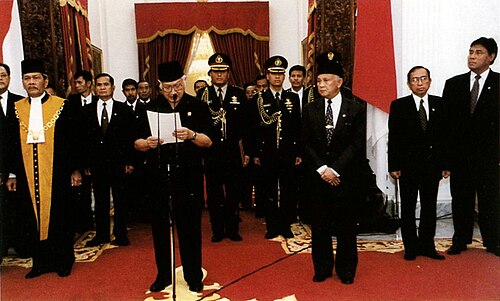
Indonesia suffered the most catastrophic collapse. The rupiah, which had traded at approximately 2,400 per dollar, cratered to 16,800 per dollar by January 1998 — an 86% depreciation that ranks among the most extreme currency crashes in modern history. Indonesian corporations that had borrowed in dollars saw their debt burdens multiply sevenfold overnight. Banks became insolvent. GDP contracted by 13.1% in 1998. Food riots erupted across the archipelago, ethnic violence targeted the Chinese-Indonesian minority, and after 32 years in power, President Suharto was forced to resign in May 1998.
South Korea, then the world's eleventh-largest economy, buckled under similar pressures. Korean chaebol — giant industrial conglomerates like Hyundai, Samsung, Daewoo, and LG — had taken on massive debts to fund aggressive expansion, with the average debt-to-equity ratio of the top thirty exceeding 500% in 1997. When foreign banks refused to roll over their short-term loans, the Korean financial system seized up and the won fell from 850 to nearly 2,000 per dollar.
Source: Bank of Thailand historical exchange rate data
The IMF Interventions
Rescue packages of unprecedented scale followed in rapid succession: $17.2 billion for Thailand in August 1997, $43 billion for Indonesia in October, $57 billion for South Korea in December. Together, the commitments exceeded $117 billion, dwarfing any previous IMF intervention.
The conditions attached to these packages ignited a debate that has never been fully settled. Following a template developed for Latin American crises, the Fund demanded fiscal austerity, tight monetary policy with high interest rates to defend currencies, structural reforms including the closure of insolvent financial institutions, and increased transparency. The logic was that these measures would restore investor confidence by demonstrating commitment to sound economic management.
Joseph Stiglitz, then the World Bank's chief economist, offered the most prominent dissent. "The IMF's remedy," he later wrote, was "to prescribe the same medicine that had worked for the diseases of Latin America — but the Asian crisis was a very different disease." Unlike Latin American crises, which typically stemmed from government profligacy, the Asian crisis originated in private sector over-borrowing. Fiscal austerity punished governments that were not the source of the problem. High interest rates bankrupted otherwise viable businesses and deepened recessions that were already severe. Forced closure of financial institutions triggered depositor panic rather than the confidence the Fund expected.
Malaysia's Prime Minister Mahathir Mohamad chose a radically different path. In September 1998, he imposed capital controls to prevent capital flight and pegged the ringgit at 3.80 per dollar. Western economists and the IMF condemned the move almost unanimously. But Malaysia's subsequent recovery proved at least as strong as those of the countries that had followed the Fund's prescriptions — a result that forced many economists to reconsider the orthodoxy against capital controls.
The Recovery and Its Lessons
Recovery came faster than almost anyone predicted. By 1999, GDP growth had resumed across the region, and by the early 2000s, most crisis countries had surpassed their pre-crisis output levels. But the scars ran deep, and the behavioral changes they produced would reshape global finance for a generation.
Nothing illustrated this more clearly than the massive accumulation of foreign exchange reserves by Asian central banks. Determined never again to be vulnerable to a sudden reversal of capital flows, countries across the region built war chests of dollar-denominated reserves on a scale without historical precedent. China's reserves alone grew from $140 billion in 1997 to $3.8 trillion by 2014. This "self-insurance" meant that Asian savings flowed to the United States in the form of Treasury bond purchases — contributing to the low interest rates and abundant credit that would eventually fuel the US housing bubble and the 2008 financial crisis.
Institutional reforms followed too. The Financial Stability Forum (later the Financial Stability Board) was established in 1999. The IMF developed new lending facilities better suited to capital account crises. Crisis economies strengthened bank regulation, improved corporate governance, reduced reliance on short-term foreign borrowing, and adopted more flexible exchange rate regimes.
What 1997 revealed, above all, was the speed at which capital could reverse direction. Fixed exchange rate pegs created moral hazard by encouraging unhedged foreign borrowing. Short-term inflows could turn into outflows within days. Financial crises spread through contagion channels invisible during calm periods. And the IMF's one-size-fits-all approach, designed for a different kind of crisis in a different part of the world, could make a bad situation worse. A decade later, when the next great financial crisis struck, the money flowed out of different assets in different countries — but the underlying dynamics of leverage, panic, and contagion were the same.
Related
Historical records Learn more about our methodology.