The Bank That Had Everything
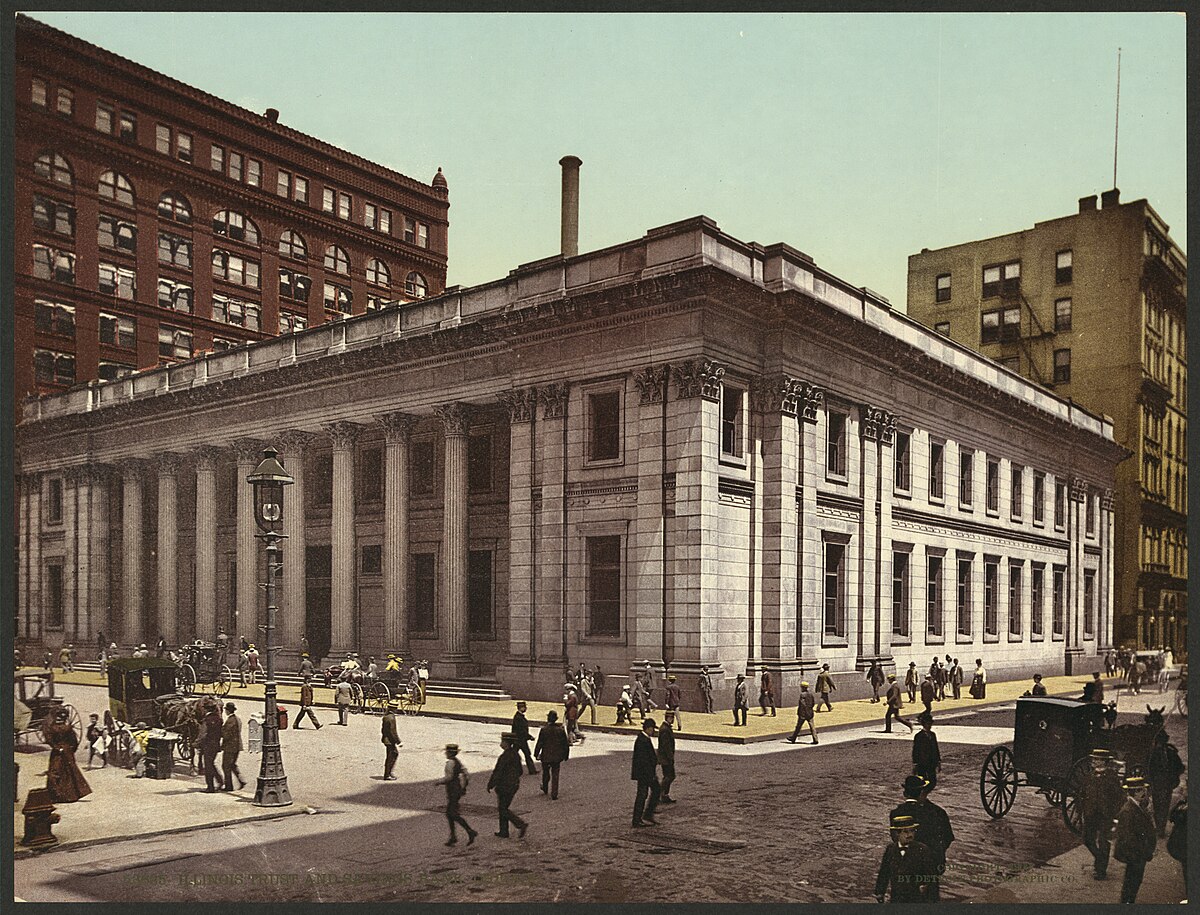
By the late 1970s, Continental Illinois National Bank and Trust Company was a marvel of American finance. Headquartered in a granite tower on LaSalle Street in Chicago, it ranked as the seventh-largest commercial bank in the United States, with assets approaching $40 billion. Its commercial lending division was considered the most aggressive and innovative in the country. Fortune magazine profiled its management team. Institutional investors held the stock as a blue-chip staple. Roger Anderson, who became chairman in 1973, had transformed the institution from a staid Midwestern lender into what analysts called the premier commercial banking franchise in America.
Anderson's strategy was deceptively simple: grow the loan book faster than anyone else. Continental Illinois would lend to energy companies, agricultural firms, and corporations that other banks considered too risky or too complex. It would buy loan participations from smaller banks across the country, taking on credit risk originated by institutions it had never audited and borrowers it had never met. Speed was the culture. Loan officers were promoted based on volume. Due diligence was an afterthought.
The strategy worked brilliantly in the inflationary environment of the late 1970s. Energy prices were soaring. Real estate values climbed. The loans Continental originated or purchased performed well, and the bank's earnings grew at rates that made it the envy of the industry. Between 1976 and 1981, Continental's assets doubled. Its stock price climbed above $40 per share. Analysts at Salomon Brothers rated it the most profitable large bank in the country (Kaufman, 1990).
But there was a structural vulnerability that the good times concealed. Illinois law prohibited branch banking, which meant Continental could not gather retail deposits through a network of consumer branches the way banks in New York or California could. Instead, it funded its enormous loan book almost entirely through wholesale markets — certificates of deposit sold to institutional investors, federal funds borrowed from other banks, and Eurodollar deposits from foreign institutions. Roughly 90% of Continental's deposits came from sources that could vanish with a phone call or a wire transfer. It was a bank built on borrowed confidence.
The Shopping-Mall Bank
Six hundred miles south of Chicago, in a strip mall on the northwest side of Oklahoma City, sat Penn Square Bank. It was a tiny institution — roughly $500 million in assets at its peak — but it had ambitions that far exceeded its size. Under the leadership of Bill Patterson, the head of its energy lending division, Penn Square had become a prolific originator of oil and gas loans during the energy boom of the early 1980s.
Patterson was a flamboyant character who reportedly wore a Mickey Mouse hat to business meetings, drank beer from his cowboy boots, and wrote loan agreements on cocktail napkins. His lending standards were, by any reasonable measure, nonexistent. Penn Square would make enormous energy loans — sometimes to borrowers with little equity and no proven reserves — and then sell participations in those loans to larger banks. Continental Illinois was the biggest buyer.
Between 1980 and 1982, Continental purchased approximately $1 billion in energy loan participations from Penn Square. The loans came with documentation that was frequently incomplete, occasionally fabricated, and almost never independently verified by Continental's own credit analysts. Continental's management trusted Penn Square's origination because the loans carried high interest rates and the energy sector appeared to be booming. Nobody asked hard questions about a tiny Oklahoma bank's ability to underwrite billion-dollar lending programmes (FDIC, 1997).
When oil prices began falling in 1981, the cracks appeared immediately. Borrowers who had leveraged themselves against $40-per-barrel oil found themselves unable to service their debts as prices dropped toward $30 and then $25. Penn Square's loan book, which had been assembled with all the rigor of a poker game, began to disintegrate.
On July 5, 1982, the Office of the Comptroller of the Currency declared Penn Square Bank insolvent and the FDIC was appointed receiver. It was a small bank failure by national standards. But the shrapnel flew far.
Slow-Motion Collapse
Continental Illinois did not die on the day Penn Square failed. It died slowly, over two years, as the energy loans it had purchased rotted through its balance sheet like termites through a wooden beam.
The numbers told the story in installments. In the second half of 1982, Continental reported $700 million in nonperforming energy loans. By year-end 1983, total nonperforming assets had reached $2.3 billion. Each quarterly earnings report brought fresh write-downs and mounting losses. The ratings agencies responded in sequence: Moody's downgraded Continental's long-term debt in 1982, followed by Standard and Poor's. Each downgrade made wholesale funding more expensive, which squeezed earnings further, which prompted more downgrades.
A traditional retail bank might have survived this kind of loan deterioration. Retail depositors are sticky. They do not monitor credit ratings or read regulatory filings. They keep their money in the bank because it is convenient, because it is insured, because they have a relationship with their local branch. Continental had almost none of these advantages. Its depositors were institutional investors, money market funds, and foreign banks — sophisticated parties who tracked every credit downgrade and recalculated their exposure daily.
Throughout 1983, Continental's management attempted to stabilize the situation. They raised new capital. They sold assets. They replaced the executive team, with David Taylor succeeding Anderson as chairman. None of it was enough. The loan losses continued, the downgrades continued, and the wholesale depositors grew steadily more nervous.
The Electronic Bank Run
On Thursday, May 10, 1984, rumours began circulating in the financial markets that Continental Illinois was on the verge of insolvency. The precise origin of the rumours has never been definitively established — some accounts trace them to a Reuters newswire report, others to trading floor gossip in Tokyo. What mattered was not where the rumours started but how fast they moved.
Within hours, institutional depositors began pulling their money. There were no queues outside Continental's LaSalle Street headquarters. There were no television cameras capturing anxious crowds. This was a bank run conducted entirely through electronic wire transfers and telephone calls to fund managers. It was invisible to the public but devastating in speed and scale.
In the first ten days of the crisis, approximately $10 billion in deposits and federal funds were withdrawn from Continental Illinois. Japanese banks, which had provided substantial overnight funding, were among the first to pull out. European institutions followed. Domestic money market funds, which held Continental's certificates of deposit, began refusing to roll them over at maturity (Sprague, 1986).
The bank turned to the Federal Reserve's discount window, borrowing heavily to replace the vanishing wholesale funding. At the peak of the crisis, Continental was borrowing approximately $3.5 billion from the Fed — a staggering figure for a single institution. The Federal Reserve was effectively keeping the bank alive on a day-by-day basis.
| Key Crisis Timeline | Event |
|---|---|
| July 1982 | Penn Square Bank fails; Continental's $1B in participations exposed |
| Late 1982 | Moody's and S&P downgrade Continental's debt |
| 1983 | Nonperforming assets reach $2.3 billion; management replaced |
| May 10, 1984 | Rumours trigger electronic run; $10B withdrawn in 10 days |
| May 14, 1984 | 16-bank consortium provides $4.5B emergency credit line |
| May 17, 1984 | FDIC, Fed, and OCC announce full guarantee of all deposits and creditors |
| July 26, 1984 | FDIC announces permanent rescue: $4.5B package, effective nationalization |
| September 1984 | Rep. McKinney coins "too big to fail" in Congressional hearing |
The Decision That Changed Everything
FDIC Chairman William Isaac faced a choice that had no good options. Continental Illinois held approximately $40 billion in assets. It had correspondent banking relationships with 2,300 smaller banks across the country, many of which held uninsured deposits at Continental. If Continental were allowed to fail in the traditional sense — with the FDIC paying off insured depositors and letting uninsured creditors absorb losses — the cascading effects could bring down dozens of smaller institutions that depended on Continental for services and funding.
Isaac later described the deliberations as agonizing. The FDIC's own analysis suggested that 66 banks held correspondent balances at Continental that exceeded their total capital — meaning those banks would be rendered insolvent by Continental's failure. Another 113 banks had exposures large enough to cause serious financial distress (Isaac, 2010).
On May 17, 1984, the FDIC, the Federal Reserve, and the Office of the Comptroller of the Currency took an unprecedented step. They jointly announced that all depositors and general creditors of Continental Illinois would be fully protected — not just those with insured deposits under $100,000, but everyone. Bondholders, holders of certificates of deposit, foreign bank counterparties — all would be made whole.
It was, in all but name, a blanket government guarantee of a private bank's obligations. Nothing like it had been attempted since the creation of the FDIC in 1933.
The temporary measures gave way to a permanent rescue on July 26, 1984. The FDIC injected $4.5 billion into the bank, took an 80% equity stake, replaced the management, and began the long process of winding down the bad loan portfolio. Continental Illinois continued to exist as a legal entity, but it was effectively nationalized. The shareholders were nearly wiped out. The creditors, however, lost nothing.
"We Have a New Kind of Bank"
On September 19, 1984, Congressman Stewart McKinney of Connecticut sat before the House Banking Committee as it examined the Continental rescue. During the hearing, McKinney delivered a line that would echo through three decades of financial history: "We have a new kind of bank. It is called too big to fail, and it is a wonderful bank."
McKinney's phrase crystallized a concept that regulators had understood intuitively but never articulated publicly. If a bank was large enough — if its failure would cause sufficient collateral damage to the broader financial system — the government would intervene to prevent that failure, regardless of the cost. The discipline of the market, which was supposed to punish reckless lending and inadequate risk management, would be suspended for institutions above a certain size threshold.
The implications were immediate and corrosive. If creditors of large banks knew they would be rescued, they had no incentive to monitor those banks' risk-taking. A depositor who placed $10 million in certificates of deposit at a giant bank could earn higher yields without worrying about the bank's solvency, because the government would make them whole in a crisis. The market signal that was supposed to constrain risk — the threat of loss — had been removed for the largest players.
FDIC Chairman Isaac was summoned to testify before Congress later that fall. Under questioning, he was asked whether the FDIC's protection of all Continental creditors meant that the agency considered certain banks too large to be allowed to fail. Isaac attempted to avoid a direct answer but ultimately acknowledged the practical reality. When pressed to identify which banks fell into this category, the Comptroller of the Currency, C. Todd Conover, identified eleven banks that the regulators regarded as too big to fail (Stern and Feldman, 2004).
The list was never officially published, but its existence leaked immediately. Every bank on the list gained an implicit government guarantee. Every bank not on the list was at a competitive disadvantage. The playing field had been permanently tilted.
The Moral Hazard Machine
Continental Illinois did not invent moral hazard, but it gave the concept a concrete, undeniable demonstration. When the government guarantees the creditors of a failing institution, it sends a signal to every other institution and every other creditor: risk is subsidized. You can lend recklessly, because the downside is absorbed by the taxpayer.
The savings and loan crisis that devastated the American financial system from 1986 to 1995 was, in part, a consequence of this logic. S&L operators watched the Continental rescue and drew the obvious conclusion: if you are big enough, or if enough depositors are at risk, the government will step in. Heads I win, tails the taxpayer loses. The resulting wave of speculation, fraud, and reckless lending cost taxpayers $132 billion and destroyed more than a thousand institutions.
Academics and regulators debated the moral hazard problem extensively in the years after Continental. Gary Stern, president of the Federal Reserve Bank of Minneapolis, became one of the most vocal critics of the too-big-to-fail doctrine, arguing that it created a self-reinforcing cycle: the expectation of government rescue encouraged large banks to take greater risks, which made them more likely to need rescuing, which reinforced the expectation of rescue (Stern and Feldman, 2004).
But dismantling the doctrine proved far harder than criticizing it. Every time a large institution teetered, regulators faced the same calculation that William Isaac had faced in 1984: the cost of rescue was visible and immediate, while the cost of moral hazard was diffuse and long-term. Rescue always won.
The First Electronic Bank Run
One of Continental's most significant legacies is methodological rather than doctrinal. It was the first major bank failure driven by an electronic run — a withdrawal of funds conducted not by panicking individuals lining up at branches but by institutions moving money through wire transfers and electronic payment systems.
This distinction matters enormously. A retail bank run is visible. It generates images — queues, anxious faces, shuttered doors — that attract media attention and political intervention. An electronic wholesale run is invisible to the public. It happens on screens in treasury departments and trading floors around the world. By the time anyone outside the financial system notices, the damage is already catastrophic.
The pattern Continental established in 1984 repeated itself with eerie precision over the following decades. When Northern Rock faced its crisis in 2007, it was wholesale funding that collapsed first — the retail queues came later, after the wholesale market had already condemned the institution. When Bear Stearns collapsed in March 2008, the mechanism was identical: overnight repo lenders and prime brokerage clients pulled their funding via electronic transfer, and the firm was insolvent within days. When Lehman Brothers failed in September 2008, the pattern was the same.
Continental Illinois demonstrated that in a world of electronic payments and global capital flows, a bank could be destroyed in days without a single customer ever walking through the door. The traditional bank run — the Dickensian image of frightened savers demanding their money — had been replaced by something faster, quieter, and far more lethal.
The Eleven Banks and the Uneven Playing Field
The disclosure that regulators considered eleven specific banks too big to fail had consequences that extended far beyond Continental Illinois. It created a formal, if unofficial, two-tier banking system.
Banks on the list — or banks perceived to be on the list — could borrow at lower rates than their smaller competitors, because their creditors faced less risk of loss. Studies conducted in the years after Continental estimated that the too-big-to-fail subsidy reduced large banks' borrowing costs by 10 to 50 basis points, depending on the methodology and the period studied (Morgan and Stiroh, 2005). Over time, this funding advantage allowed the largest banks to grow even larger, to take on more risk, and to further entrench their too-big-to-fail status.
Smaller banks, meanwhile, faced a double disadvantage. Their depositors received less protection, which made them more vulnerable to runs. And they paid higher borrowing costs, which squeezed their margins and made it harder to compete. Community bankers complained bitterly for decades that the too-big-to-fail doctrine had rigged the system against them. They were right.
The Long Shadow
Continental Illinois was rescued in 1984. In 2008, the global financial system broke. The connection between these two events is not metaphorical — it is causal.
The too-big-to-fail doctrine that Continental established shaped the incentives of every major financial institution for a quarter century. When Citigroup loaded its balance sheet with subprime mortgage exposure, its creditors did not flee — they assumed the government would intervene if things went wrong. When AIG wrote hundreds of billions of dollars in credit default swaps without adequate reserves, its counterparties did not demand collateral — they assumed AIG was too interconnected to be allowed to fail. When Lehman Brothers leveraged itself at 30 to 1, its repo lenders kept lending — until the morning they did not.
The Dodd-Frank Wall Street Reform and Consumer Protection Act, passed in 2010, was explicitly designed to end too big to fail. It created the Orderly Liquidation Authority, giving regulators tools to wind down failing systemically important institutions without a taxpayer bailout. It required the largest banks to submit living wills — detailed plans for their own resolution in the event of failure. It imposed higher capital requirements and stress tests on institutions deemed systemically important.
Whether Dodd-Frank has actually ended too big to fail remains one of the most contested questions in financial regulation. Critics argue that the largest banks are larger than ever, that implicit government guarantees persist, and that the next crisis will produce the same desperate calculus that William Isaac faced in his FDIC office in May 1984. Supporters counter that capital levels are substantially higher, that resolution planning has improved, and that the tools available to regulators are far more sophisticated than anything that existed in the 1980s.
A Warning Written in Wire Transfers
Roger Anderson retired from Continental Illinois in 1984 with his reputation destroyed. William Isaac left the FDIC in 1985, having established a precedent he spent the rest of his career trying to walk back. Stewart McKinney died of AIDS-related illness in 1987, three years after giving the financial lexicon its most enduring phrase. Continental Illinois itself was eventually acquired by BankAmerica Corporation in 1994, absorbed into what would become Bank of America — which would, in 2008, require its own government rescue.
Penn Square Bank, the shopping-mall institution that started it all, was liquidated. Its depositors with accounts over $100,000 waited years for partial recovery. Bill Patterson, the cowboy-boot-beer-drinking loan officer, was convicted of fraud and sentenced to prison.
The lesson Continental Illinois taught the financial system was not the one the regulators intended. The intended lesson was that reckless lending has consequences. The lesson the system actually learned was that reckless lending has consequences only if you are small enough to fail. If you are large enough, the consequences are transferred to the taxpayer, and the phrase Stewart McKinney coined in a Congressional hearing room becomes not a warning but a business strategy.
Forty years later, that lesson has still not been unlearned.
Related
Historical records Learn more about our methodology.