Forced Loans and the Birth of Sovereign Credit
In 1164, Doge Vitale II Michiel returned from a catastrophic military expedition against the Byzantine Empire. His fleet had been ravaged by plague, his campaign had accomplished nothing, and the Republic of Venice faced an immediate fiscal crisis. Venetian citizens, already burdened by the costs of the failed expedition, were compelled to make loans to the state — not as a voluntary act of patriotism, but as a mandatory obligation assessed in proportion to their wealth. Each contributor received a credit entry in a government ledger and was promised annual interest of 5 percent.1
Nothing about this arrangement was entirely new. Forced loans had been imposed by Italian city-states before, and the concept of sovereign borrowing stretched back to antiquity. What distinguished Venice was what happened next. Over the following century, these compulsory contributions evolved into something no government had previously created: transferable, interest-bearing securities that could be bought and sold on an open market. A citizen who needed cash before the loan matured could sell his claim to another buyer. A wealthy merchant could accumulate credits from multiple holders. Widows could inherit them; guardians could manage them on behalf of orphans.
By the early thirteenth century, a secondary market in Venetian government debt was operating in the open air along the Rialto, where bankers, brokers, and merchants gathered daily to transact business. Citizens checked the posted prices of prestiti — as these forced-loan credits came to be known — with the same anxious attention that modern investors devote to bond yields. Prices fluctuated with Venice's military fortunes, its diplomatic standing, and the perceived reliability of future interest payments. When the Republic won a naval victory, prestiti prices rose. When it suffered a defeat or faced an expensive new war, they fell.2
Venice had, without quite intending to, invented the government bond market.
Monte Vecchio: Permanent Funded Debt
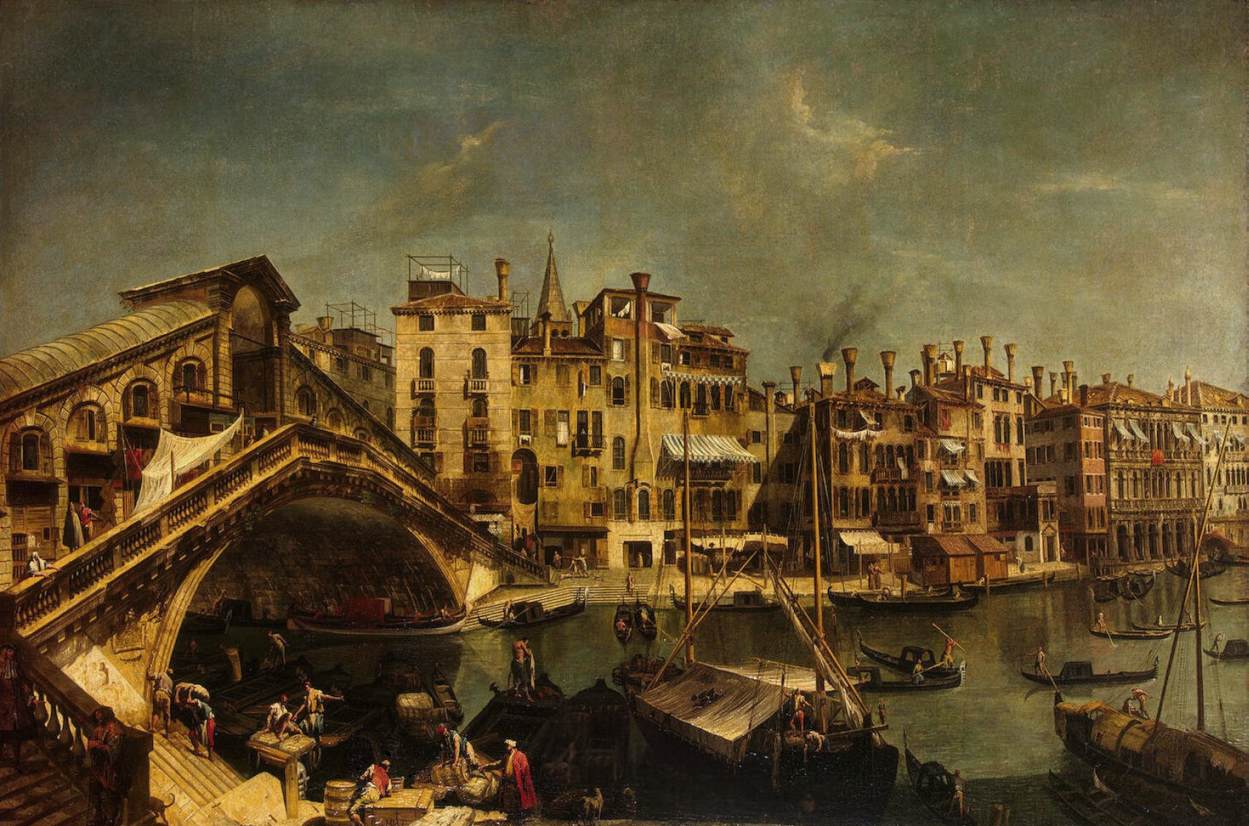
A critical turning point arrived in 1262, when the Great Council consolidated all outstanding forced loans into a single fund called the Monte Vecchio — literally, the "Old Mountain" of debt. Before this consolidation, each forced loan had been tracked separately, creating an administrative tangle that made trading cumbersome and repayment uncertain. Consolidation simplified everything. All existing claims were merged into one ledger, administered by a dedicated office (the Ufficiali del Monte), and paid a uniform 5 percent interest from designated tax revenues.
This was, in substance, the creation of a permanent national debt. Rather than borrowing for a specific purpose and repaying when the emergency passed, Venice acknowledged that the state would carry debt indefinitely, servicing it through regular interest payments funded by ongoing taxation. Luciano Pezzolo has described this as a fundamental conceptual shift — the recognition that public debt was not a temporary expedient but a permanent feature of government finance.3
| Period | Approximate Outstanding Debt (ducats) | Interest Rate | Prestiti Market Price (per 100 ducats par) |
|---|---|---|---|
| 1262 | 500,000 | 5% | ~95 |
| 1300 | 800,000 | 5% | 80-92 |
| 1350 | 1,500,000 | 5% | 60-75 |
| 1381 (post-Chioggia) | 5,000,000+ | 5% | 18-19 |
| 1420 | 4,000,000 | 5% | 30-45 |
| 1480 | 6,000,000 | 5% | 40-55 |
| 1509 (post-Cambrai) | 8,000,000+ | 5% | 20-30 |
| 1600 | 12,000,000 | Variable | 50-65 |
Monte Vecchio operated with remarkable sophistication for a medieval institution. Interest was paid semi-annually. Transfers of ownership were recorded by clerks in official registers, with both buyer and seller required to appear in person or by proxy. Claims could be divided into smaller denominations, making them accessible to investors of modest means. Frederic Lane noted that by the fourteenth century, even convents, hospitals, and charitable foundations held prestiti as income-producing endowments — an early precursor to the institutional investors that dominate modern bond markets.4
Rialto: A Financial Ecosystem
Venice's debt market did not operate in isolation. It was embedded within the broader financial ecosystem of the Rialto, which by the thirteenth century had become one of Europe's most sophisticated commercial districts. Along the narrow streets and arcaded porticoes near the famous bridge, a dense network of private bankers (banchieri di scritta), bill-brokers, insurance underwriters, and commodity traders conducted business that would have been recognizable to any modern financial professional.
Private bankers accepted deposits and made payments by transferring credits between accounts on their books — a system of book-entry transfers that eliminated the need to physically move coins. Depositors at one bank could settle debts with depositors at another through interbank clearing arrangements. Bill-brokers negotiated letters of exchange that facilitated trade between Venice and distant markets in Constantinople, Alexandria, Bruges, and London. Marine insurance underwriters assessed risks and wrote policies covering cargoes traveling across the Mediterranean and beyond.
Reinhold Mueller's exhaustive study of Rialto banking reveals an environment of startling modernity. Interest rates on deposits varied by term and risk. Credit was extended against collateral, with government prestiti frequently pledged as security for private loans. Exchange rates with foreign currencies were posted daily and fluctuated in response to trade balances and political developments. Bankruptcies were adjudicated by specialized magistrates, and failed bankers faced not merely financial ruin but criminal prosecution and, in some cases, permanent banishment from the Rialto.5
Source: Reconstructed from Lane (1973) and Pezzolo (2003)
Wars, Debt Spirals, and the Price of Empire
Venice's ability to borrow cheaply depended on its reputation for honoring obligations — and that reputation was tested repeatedly by the costs of warfare. Conflicts with rival maritime republic Genoa consumed much of the thirteenth and fourteenth centuries, culminating in the devastating War of Chioggia (1378-1381). At the war's outset, Genoese forces seized the island of Chioggia in the Venetian lagoon itself, threatening the Republic's very survival. Venice ultimately prevailed, but the fiscal cost was staggering. Forced loans were imposed at crushing rates, and the total stock of outstanding prestiti ballooned. By the war's end, prestiti that had once traded near par had collapsed to roughly 19 ducats per 100 of face value — an implicit yield approaching 26 percent, reflecting deep skepticism that the government could sustain its interest payments.6
Recovery was slow but real. Over the following decades, Venice rebuilt its finances, resumed regular interest payments, and prestiti prices gradually recovered. But the pattern had been established. Each new military emergency — the wars against Milan in the early fifteenth century, the Ottoman conquest of Constantinople in 1453, the prolonged struggle to defend Venetian possessions in the eastern Mediterranean — triggered new rounds of forced lending and fresh pressure on prestiti prices. War finance became a ratchet: debt expanded during emergencies and rarely contracted fully in peacetime.
Comparing Venice with its Italian rivals illuminates different approaches to the same fundamental problem. Florence created the Monte Comune in 1345, a consolidated debt fund inspired by the Venetian model but shaped by Florence's very different political dynamics. Florentine forced loans were distributed through a system (the estimo and later the catasto) that became a tool of factional politics; the Medici and their rivals manipulated tax assessments to punish enemies and reward allies. Genoa took a more radical approach, establishing the Casa di San Giorgio in 1407 — an institution that managed both the Republic's debt and, eventually, its colonial territories. San Giorgio became a kind of state within a state, a creditors' association so powerful that it sometimes dictated terms to the government itself.
| Feature | Venice (Monte Vecchio) | Florence (Monte Comune) | Genoa (Casa di San Giorgio) |
|---|---|---|---|
| Established | 1262 | 1345 | 1407 |
| Interest rate | 5% fixed | Variable (3-5%) | Variable |
| Transferability | Freely tradeable | Tradeable | Tradeable, with shares |
| Administration | Government office | Government commission | Autonomous creditor body |
| Political character | Oligarchic stability | Factional instrument | Semi-independent entity |
| Debt management | State-controlled | State-controlled | Creditor-controlled |
Proto-Central Banks: Banco della Piazza and Banco del Giro
By the late sixteenth century, Venice's private banking sector had experienced a series of devastating failures. Rialto bankers, operating with inadequate reserves and excessive leverage, collapsed with alarming regularity, destroying depositors' savings and disrupting commercial life. In response, the Senate established the Banco della Piazza di Rialto in 1587 — a public bank that accepted deposits, made transfers, and critically, was prohibited from lending. Depositors' funds were held in full reserve, backed by coin in the vault. Payments between merchants were settled by book-entry transfers on the bank's ledgers, eliminating the credit risk that had plagued private institutions.
In 1619, the Senate created a second institution, the Banco del Giro, which went further. Originally established to manage government payment obligations, it evolved into a transfer bank that became the effective monetary authority of the Republic. Credits at the Banco del Giro circulated as a form of bank money — claims on the institution that were accepted at par for all transactions and, in practice, functioned as a more convenient and reliable medium of exchange than physical coin. Merchants preferred bank credits to specie because they eliminated the risks of counterfeiting, clipping, and physical transport.
These institutions anticipated, in important respects, the central banks that would emerge in northern Europe a century later. Amsterdam's Wisselbank, established in 1609, operated on strikingly similar principles. When the Bank of England was founded in 1694 — partly to manage the English government's wartime borrowing — it drew on a tradition of public banking that Italian city-states had pioneered. Venice's contribution was not merely conceptual. It was institutional: the idea that a government-sponsored bank could provide monetary stability, facilitate public debt management, and serve as the foundation of a broader financial system.7
Decline: Cambrai, the Ottomans, and Fiscal Exhaustion
Venice entered the sixteenth century as a great power, but the century brought challenges that gradually overwhelmed its fiscal capacity. In 1509, the War of the League of Cambrai united virtually all of Europe's major powers — France, Spain, the papacy, the Holy Roman Empire — against Venice in a coalition that threatened to dismember the Republic entirely. Venice survived through a combination of diplomatic skill and sheer stubbornness, but at an enormous financial cost. New forced loans were imposed, a fresh debt fund (the Monte Nuovo) was created alongside the Monte Vecchio, and prestiti prices cratered once more.
Ottoman expansion posed an even more sustained drain. Venice fought a series of wars to defend its eastern Mediterranean possessions — Cyprus fell in 1570, Crete was lost after a twenty-five-year siege in 1669 — each requiring enormous military expenditure that could only be financed through additional borrowing. By the seventeenth century, the Republic's debt burden had grown so heavy that interest payments consumed a large fraction of government revenue, leaving little for investment in the commercial infrastructure that had once made Venice wealthy.
Venice adapted. It experimented with lottery-linked bonds, created new categories of funded debt, and occasionally reduced interest rates on existing obligations — a form of soft default that eroded investors' trust. It sold offices and titles, imposed new consumption taxes, and squeezed its colonial subjects. But these expedients could not reverse the fundamental trajectory. As the Dutch East India Company and northern European trading powers overtook Venice in global commerce, the Republic's tax base stagnated even as its military commitments remained punishing.
The secondary market reflected this slow decline. Where prestiti had once traded at prices suggesting broad confidence in the Republic's creditworthiness, by the seventeenth century they circulated at deep discounts. Investors demanded higher implicit yields to compensate for the growing risk that interest payments might be suspended or reduced. Something resembling a yield curve emerged, with different tranches of Venetian debt trading at different prices depending on their seniority and the reliability of their backing revenues — a remarkably modern phenomenon in a pre-modern setting.
Napoleon and the End
On May 12, 1797, the Great Council of Venice convened for the last time. Napoleon Bonaparte's armies had swept across northern Italy, and French troops stood at the edge of the lagoon. Faced with an ultimatum and lacking the military capacity to resist, the council voted to dissolve the Republic that had endured for over a thousand years. Doge Ludovico Manin removed his corno — the distinctive ducal cap — and handed it to his valet, reportedly murmuring that he would not be needing it again.
Napoleon's forces occupied Venice and systematically stripped it of its wealth. Art, treasure, and the bronze horses of San Marco were carried off to Paris. More consequentially for financial history, the new French administration reorganized Venetian public finances, ultimately absorbing the Republic's remaining debt obligations into the broader framework of Napoleonic-era fiscal structures. The Monte Vecchio, which had operated continuously for over five centuries, ceased to exist as an independent institution.
Legacy: Architecture of Modern Sovereign Debt
Venice's invention of funded public debt — transferable, interest-bearing, traded on a secondary market, and serviced through dedicated tax revenues — became the template for every subsequent system of government borrowing. When the Dutch Republic financed its war of independence against Spain in the late sixteenth century, it adapted Italian models of public finance. When England created the Bank of England and its national debt in the 1690s, it built explicitly on precedents that Venice and its Italian contemporaries had established centuries earlier.
Certain features of the Venetian system remain instantly recognizable in modern sovereign debt markets. Government bonds pay fixed interest at regular intervals, just as the prestiti paid 5 percent semi-annually. Bonds trade on secondary markets at prices determined by supply, demand, and perceived creditworthiness — precisely the dynamics that governed prestiti trading on the Rialto. Credit ratings, yield spreads, and the entire apparatus of sovereign risk assessment trace their intellectual ancestry to the simple question Venetian investors asked themselves every day: at what price is it worth holding a claim on this government?
Perhaps more profoundly, Venice demonstrated both the extraordinary power and the inherent dangers of sovereign borrowing. Public debt enabled the Republic to fight wars, build fleets, and project power across the Mediterranean in ways that no system of annual taxation could have supported. But it also created a self-reinforcing cycle: wars produced debt, debt required interest payments, interest payments required taxes, and taxes constrained the economic activity that generated future revenue. When military setbacks coincided with fiscal exhaustion — as they did after Cambrai, after the fall of Cyprus, after the loss of Crete — the result was a slow erosion of the financial capacity that had made Venice formidable in the first place.
Every modern government that issues bonds navigates the same tension. Sovereign debt remains simultaneously the most powerful tool of state finance and the most dangerous — a mechanism that can fund prosperity or, if mismanaged, consume it. Venice was the first state to discover this paradox, and seven centuries later, no one has resolved it.
Related
Historical records Learn more about our methodology.
Footnotes
-
Pezzolo, Luciano. "Bonds and Government Debt in Italian City-States, 1250-1650." In The Origins of Value, edited by William N. Goetzmann and K. Geert Rouwenhorst, 145-163. Oxford University Press, 2005. ↩
-
Lane, Frederic C. Venice: A Maritime Republic. Johns Hopkins University Press, 1973. ↩
-
Pezzolo, Luciano. "Government Debts and Credit Markets in Renaissance Italy." In Government Debts and Financial Markets in Europe, edited by Fausto Piola Caselli, 17-32. Pickering & Chatto, 2008. ↩
-
Lane, Frederic C. "The Funded Debt of the Venetian Republic, 1262-1482." In Venice and History: The Collected Papers of Frederic C. Lane, 87-98. Johns Hopkins University Press, 1966. ↩
-
Mueller, Reinhold C. The Venetian Money Market: Banks, Panics, and the Public Debt, 1200-1500. Johns Hopkins University Press, 1997. ↩
-
Lane, Frederic C. and Reinhold C. Mueller. Money and Banking in Medieval and Renaissance Venice. Vol. 1. Johns Hopkins University Press, 1985. ↩
-
Pezzolo, Luciano. "The Venetian Government Debt, 1350-1650." In Urban Public Debts: Urban Government and the Market for Annuities in Western Europe, edited by Marc Boone et al., 61-85. Brepols, 2003. ↩