A Diplomat's Journey into the Unknown
In 138 BC, Emperor Wu of the Han Dynasty dispatched a minor court official named Zhang Qian on a mission that would reshape the economic geography of the ancient world. Zhang's assignment was diplomatic, not commercial — he was to travel west beyond the Taklamakan Desert and forge an alliance with the Yuezhi people against the Xiongnu nomads who threatened China's northern frontier. The mission failed on its own terms. Zhang was captured by the Xiongnu, held prisoner for over a decade, and eventually returned to Chang'an in 125 BC with only one of his original companions still alive.1
But what Zhang brought back was worth more than any military alliance: detailed intelligence about the kingdoms of Central Asia, their products, and their appetite for Chinese goods. He reported that in the markets of Ferghana and Bactria — in modern Uzbekistan and Afghanistan — Chinese silk was already arriving through intermediary traders, commanding extraordinary prices. The Han court grasped the implications immediately. Here was an opportunity not merely for trade but for strategic influence across a vast continental expanse.
Within a generation, the Han Dynasty had extended military garrisons along the Hexi Corridor, established diplomatic relations with dozens of Central Asian kingdoms, and created the infrastructure for what German geographer Ferdinand von Richthofen would name, in 1877, the Silk Road. It was never a single road. It was a web of routes — northern paths skirting the Taklamakan through Turpan and Kashgar, southern branches through Khotan and Yarkand, maritime extensions reaching from Guangzhou to the Persian Gulf — that collectively formed the most significant trade network the world had ever seen.
The Economics of Distance
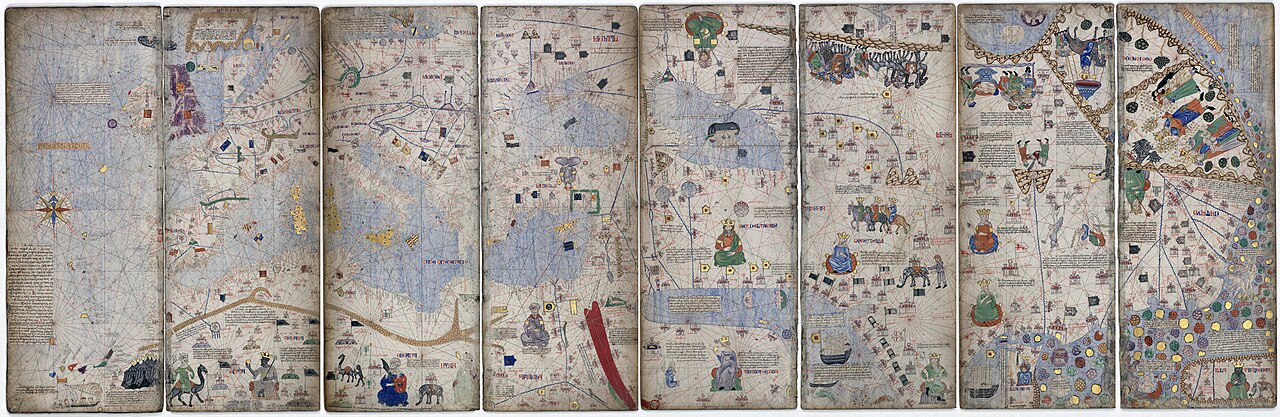
What made the Silk Road economically viable was the staggering price differential between production costs in one civilization and selling prices in another. Silk — the commodity that gave the routes their name — could be produced in China at relatively modest cost, but in Rome it sold for its weight in gold. Pliny the Elder complained in the first century AD that Rome's appetite for silk was draining the empire of 100 million sesterces annually, a figure likely exaggerated but reflective of genuine alarm about the trade deficit with the East.2
The price markups were not arbitrary; they reflected the genuine costs and dangers of traversal. A bale of silk might change hands six or seven times between Chang'an and Antioch, with each intermediary adding a margin. Bandits, sandstorms, mountain passes above 4,000 meters, and political instability all extracted their toll. Mortality rates among caravan merchants were substantial. Yet the final markup — sometimes exceeding 1,000 percent — made the risk worthwhile for those who survived.
Silk flowed west; other commodities flowed east. Central Asian horses — larger and stronger than Chinese breeds — were so valued by the Han military that they called them "heavenly horses" and waged war to secure breeding stock. Indian spices, particularly pepper and cinnamon, commanded premium prices in Chinese and Roman markets alike. Jade from Khotan traveled east to Chinese workshops. Roman glassware moved in the opposite direction. Lapis lazuli from Afghanistan, frankincense from Arabia, furs from the Siberian steppe — each found buyers willing to pay multiples of the original price.
| Commodity | Origin | Primary Destination | Approximate Price Markup |
|---|---|---|---|
| Silk | China | Rome | 500-1,000% |
| Pepper | India | Rome, China | 300-800% |
| Horses | Ferghana (Central Asia) | China | 200-500% |
| Jade | Khotan | China | 150-400% |
| Glassware | Rome, Syria | China | 200-600% |
| Lapis lazuli | Afghanistan | China, Rome | 300-700% |
| Frankincense | Arabia | Rome | 200-500% |
| Furs | Siberian steppe | China, Persia | 200-400% |
The Sogdians — FedEx of the Ancient World
No single group did more to operationalize Silk Road trade than the Sogdians, an Iranian-speaking people centered in the Zerafshan Valley of modern Uzbekistan and Tajikistan. From roughly the fourth to the eighth century, Sogdian merchant networks dominated Central Asian commerce with an efficiency and organizational sophistication that anticipated modern logistics companies.3
The Sogdian advantage was systemic. Their trading colonies — established in cities from Samarkand to Chang'an — functioned as nodes in a network held together by kinship, shared language, and contractual trust. A Sogdian merchant in Dunhuang could write a letter of credit that would be honored by a Sogdian agent in Bukhara, 2,500 miles away, because both operated within a system where reneging on obligations meant exclusion from the network itself. This was reputation-based finance in its purest form, centuries before European merchant bankers developed comparable systems.
The Sogdian Ancient Letters, discovered in a watchtower near Dunhuang and dating to around 313 AD, provide a remarkable window into this commercial world. Written by Sogdian merchants stranded in China during a period of political upheaval, the letters discuss trade goods, prices, debts owed, and the logistics of moving commodities across thousands of miles. They reveal a community conducting business with formal accounting practices, established credit terms, and a communication network spanning Central Asia.
Financial Infrastructure — Flying Money and Caravanserais
Long-distance trade demanded financial tools more sophisticated than barter or coin-carrying. The solutions that emerged along the Silk Road constitute some of humanity's earliest financial innovations.
The Tang Dynasty (618-907) formalized a system called feiqian — literally "flying money" — that functioned as a proto-bill of exchange. A merchant could deposit copper coins with a government agent or trusted intermediary in one city and receive a paper certificate. Upon arriving at the destination city, the merchant presented the certificate and received the equivalent sum, minus a fee. This eliminated the logistical nightmare of transporting heavy strings of copper cash across bandit-infested territory and represented a conceptual leap toward abstract finance — the idea that a piece of paper could embody monetary value.
Caravanserais — fortified roadside inns spaced roughly a day's journey apart — served as the physical infrastructure of trade. More than mere lodgings, they functioned as commodity exchanges, warehousing facilities, and informal banking centers where merchants could store goods, negotiate contracts, and arrange credit. At major nodes like Samarkand, Bukhara, and Merv, caravanserais evolved into permanent marketplaces where goods from China, India, Persia, and the Mediterranean world converged.
The Islamic world contributed the hawala system, an informal value-transfer mechanism based on trust between a network of brokers. A merchant in Baghdad could deposit funds with a hawala broker and receive a code; a corresponding broker in Kashgar would release the equivalent amount upon presentation of the code. No physical money crossed the intervening distance. The system, which still operates in parts of South Asia and the Middle East today, was remarkably efficient and nearly impossible for authorities to monitor or tax — a feature that endeared it to merchants and alarmed governments in equal measure. The Medici Bank would later develop analogous bill-of-exchange systems for European commerce, though the underlying logic had been pioneered centuries earlier along these eastern routes.
Chang'an and the Tang Dynasty Golden Age
The Silk Road reached its commercial zenith during the Tang Dynasty, when Chang'an — modern Xi'an — became the largest and most cosmopolitan city on earth. With a population estimated at one million by the early eighth century, Chang'an surpassed contemporary Constantinople and Baghdad in both size and diversity. Its West Market alone covered an area equivalent to several modern city blocks and housed merchants from Persia, Arabia, India, Korea, Japan, and Central Asia.
Source: Scholarly estimates compiled from Frankopan (2015), Hansen (2012), and Liu (2010)
Tang monetary policy itself reflected the Silk Road's integrating effect. Chinese copper cash — round coins with square holes, strung together in standard denominations — circulated as far west as Persia. Roman and Byzantine gold coins, prized for their consistent purity, were hoarded and traded across Central Asia. But it was the Islamic silver dirham that came closest to serving as a universal Silk Road currency. Minted to a standardized weight across the Abbasid Caliphate, the dirham was accepted from Spain to Xinjiang, creating a monetary common ground that facilitated transactions between traders of vastly different cultures and legal traditions.
The Mongol Pax — History's Greatest Free-Trade Zone
In the thirteenth century, the Mongol conquests created something the Silk Road had never before experienced: political unity across its entire length. Genghis Khan and his successors assembled an empire stretching from Korea to Hungary, and within this empire they imposed a system that modern economists would recognize as a free-trade zone.
The Mongols standardized weights and measures, established a postal relay system — the yam — that could transmit messages 200 miles per day, issued paper money backed by silk and silver, and brutally enforced the security of trade routes. A medieval saying held that a virgin carrying a pot of gold could walk from one end of the Mongol Empire to the other without being molested — an exaggeration, but one that reflected a genuine improvement in commercial security.
Marco Polo's account of his travels in the Mongol Empire, whatever its embellishments, conveys the economic dynamism of this period. He described Khanbaliq (Beijing) as a city where 1,000 cartloads of silk entered daily and where paper money circulated as readily as gold. The Mongol court actively recruited foreign merchants, offering them tax advantages and legal protections that made the empire a magnet for commercial talent from across Eurasia.
This was also the era when the Silk Road's financial infrastructure reached its greatest complexity. The Mongol ortaq system — a partnership between the khan's treasury and private merchants — provided state-backed venture capital for long-distance trade. Merchants received capital from the imperial treasury, traded across the empire, and returned profits to the court, keeping a percentage for themselves. It was, in essence, a state-sponsored private equity arrangement.
The Black Death — The Price of Connection
The same networks that carried silk, spices, and silver also carried disease. In the 1340s, the bacterium Yersinia pestis — the Black Death — traveled the Silk Road from Central Asia to the Mediterranean with devastating efficiency. The Mongol siege of Caffa on the Crimean coast in 1346, where infected corpses were reportedly catapulted over the city walls, may have been the vector that introduced plague to European maritime networks. Genoese trading ships then carried the disease westward.
The pandemic killed an estimated 75 to 200 million people across Eurasia, collapsing trade networks that had taken centuries to build. Caravan routes fell silent. Entire merchant communities disappeared. The population of Central Asian trading cities like Samarkand declined sharply. The Black Death demonstrated, with terrible clarity, the inseparable relationship between commercial connectivity and epidemiological vulnerability — a lesson that would recur throughout the history of globalization.
The Closing of the Gates
The Silk Road did not end in a single event, but the Ottoman conquest of Constantinople on May 29, 1453 marked a decisive inflection point. The fall of Byzantium placed the critical chokepoint between Europe and Asia under Ottoman control. While the Ottomans did not close the routes entirely — they were themselves enthusiastic traders — they imposed tariffs, restricted certain goods, and gave preferential treatment to their own merchants.
For European commercial powers, the mathematics changed. The accumulated cost of Ottoman tolls, combined with the traditional markups of Central Asian intermediaries, made the overland route to China and India increasingly uneconomical. The incentive to find maritime alternatives became irresistible. Portuguese navigators pushed south along the African coast, reaching India by sea in 1498. Columbus sailed west in 1492, seeking a direct route to the spice markets of Asia.
The Dutch East India Company, established in 1602, would ultimately build the corporate structure that replaced Silk Road trade networks with oceanic commerce — deploying joint-stock financing, standardized contracts, and armed merchantmen in place of caravans, kinship networks, and caravanserais.
The Template for Globalization
The Silk Road's legacy extends far beyond the commodities that traveled its paths. It established templates — for managing cross-cultural commerce, for building financial infrastructure across political boundaries, for balancing the benefits of connectivity against its risks — that remain central to contemporary debates about globalization.
The financial innovations born along the route — bills of exchange, credit networks, informal value transfer, commodity standardization — reappeared in European finance centuries later, often developed independently but addressing identical problems. The tension between free trade and protectionism, visible in every modern trade negotiation, was already playing out in the tariff disputes between Tang officials and Sogdian merchants. The epidemiological consequences of interconnection, so dramatically illustrated by the Black Death, found their echo in the COVID-19 pandemic's disruption of global supply chains.
Perhaps most significantly, the Silk Road demonstrated that economic globalization is not a modern invention. For over 1,500 years, merchants, financiers, and intermediaries built a functioning global economy using tools that were simpler but conceptually identical to those employed today. The distances were greater, the risks more lethal, and the communication slower — but the underlying logic of buying where prices are low and selling where they are high, and of building the financial infrastructure to make such transactions possible, has not changed in two millennia.
Related
Historical records Learn more about our methodology.