A World Built on Rails and Silver
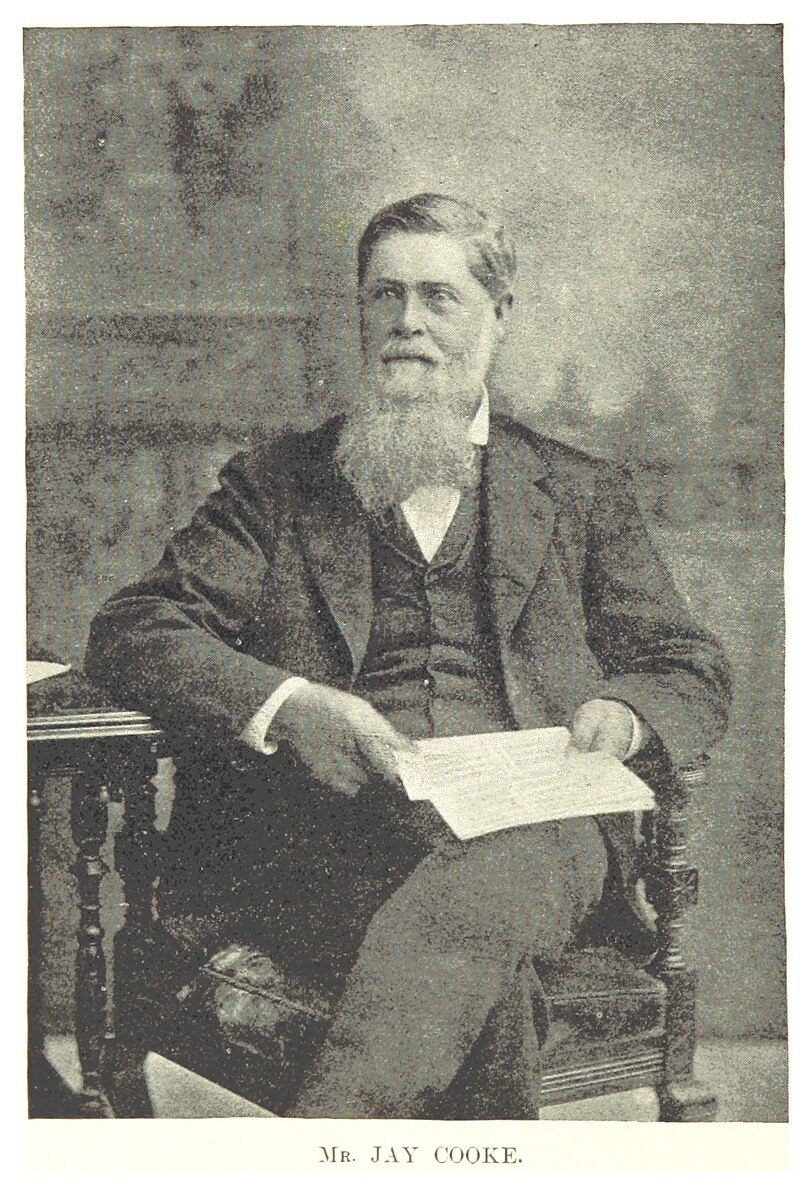
On September 18, 1873, the banking house of Jay Cooke & Company closed its doors. Founded by the man who had almost single-handedly financed the Union war effort by selling government bonds to ordinary Americans, the firm had staked its future on the Northern Pacific Railway — a transcontinental line meant to link Duluth, Minnesota, to the Puget Sound. Cooke had poured millions into the venture, issuing bonds far faster than settlers or freight could justify. When European investors, rattled by a crash on the Vienna Stock Exchange five months earlier, stopped buying American railroad paper, Cooke's empire unraveled in a single afternoon. Within days, the New York Stock Exchange shut its doors for ten days — the first such closure in its history — and the Panic of 1873 was underway.
What nobody realized at the time was that this panic would not end in a year or two, as previous financial crises had. It would stretch, in one form or another, for nearly a quarter of a century. Historians call it the Long Depression, and its consequences — the rise of organized labor, the birth of the Populist movement, the reshaping of global monetary systems, and the emergence of the antitrust state — echo through economic life to this day.
Vienna Falls First
Before Jay Cooke's failure, the crisis had already erupted in Europe. On May 9, 1873, the Vienna Stock Exchange collapsed in a frenzy of selling that wiped out years of speculative gains. Austria-Hungary had been in the grip of a Grundungsfieber — a "founders' fever" of company formation and real estate speculation — fueled by French war indemnity payments flowing through the German banking system after the Franco-Prussian War of 1870-71. More than a thousand new joint-stock companies had been incorporated in Vienna between 1867 and 1873, many of them existing only on paper (Kindleberger, Manias, Panics, and Crashes, 1978). When confidence broke, it broke everywhere at once. Berlin, Paris, and London felt the shock within weeks. By autumn, the contagion had crossed the Atlantic.
Source: U.S. Bureau of Labor Statistics, Historical Statistics of the United States
Railroads: The First Global Infrastructure Bubble
At the heart of the crisis lay the railroad. In the decade following the Civil War, American rail mileage more than doubled — from roughly 35,000 miles in 1865 to over 74,000 by 1873. Much of this construction was financed by European capital, particularly from British and German investors hungry for the 7 to 8 percent yields that American railroad bonds promised. Governments at every level showered the industry with subsidies: land grants, tax exemptions, guaranteed bond issues. The result was a classic overinvestment cycle.
Capacity far outstripped demand. Competing lines slashed freight rates in ruinous price wars, and dozens of railroads tumbled into receivership. Between 1873 and 1879, fully 65 railroads defaulted on their bonds — a wave of failures that punished European creditors and choked off the flow of foreign capital that had fueled the boom. Anyone familiar with the dynamics of Britain's Railway Mania of the 1840s would have recognized the pattern: transformative technology, lavish capital inflows, overbuilding, collapse.
| Period | U.S. Rail Miles | Bank Failures | Wholesale Price Change |
|---|---|---|---|
| 1865-1873 (Boom) | 35,000 to 74,000 | Minimal | +5% |
| 1873-1879 (Contraction) | 74,000 to 87,000 | 89 national banks | -32% |
| 1879-1893 (Expansion) | 87,000 to 170,000 | Sporadic | -12% |
| 1893-1896 (Second Panic) | 170,000 to 183,000 | Over 500 banks | -10% |
The Crime of '73 and the Money Question
Nothing inflamed public opinion during the Long Depression more fiercely than the money question. In February 1873, Congress passed the Coinage Act, which quietly discontinued the silver dollar as a unit of legal tender. At the time, few noticed — silver had been worth slightly more as bullion than as coin, so almost none was being brought to the mint anyway. But within years, as massive silver discoveries in Nevada's Comstock Lode and Colorado's Leadville district flooded the market and drove silver prices down, western miners and indebted farmers realized what had been taken from them. Had silver remained legal tender, the money supply would have expanded naturally, easing the deflationary squeeze. Instead, the nation found itself locked into a de facto gold standard that relentlessly contracted the currency.
Critics christened the legislation the "Crime of '73." Silver advocates — and they were legion — saw a conspiracy of eastern bankers and British creditors who profited from deflation, since falling prices meant that every dollar owed to them was worth more in real terms with each passing year. Farmers who had borrowed heavily to buy land during the postwar boom found themselves repaying debts in dollars that were steadily appreciating, even as crop prices collapsed. A bushel of wheat that fetched $1.31 in 1870 sold for just $0.49 by 1894 (Friedman and Schwartz, A Monetary History of the United States, 1963).
Deflation as the Defining Feature
Price decline was the thread running through the entire era. American wholesale prices fell approximately 32 percent between 1873 and 1896, while British prices dropped by a similar magnitude. For wage earners, the picture was complicated. Nominal wages fell, but because prices fell faster, real wages for those who remained employed actually rose — a paradox that made the depression feel simultaneously crushing and invisible, depending on where one stood.
For businesses, relentless deflation was poisonous. Revenues shrank even when physical output expanded. Profit margins compressed. Firms that had borrowed at fixed interest rates found themselves strangled by the rising real burden of debt. This dynamic drove a wave of consolidation that transformed the structure of American industry: when individual firms could not survive, they merged, forming the great trusts and monopolies — Standard Oil, U.S. Steel, American Tobacco — that would dominate the economy for decades and eventually provoke the antitrust legislation of the Progressive Era.
A Paradox of Growth Amid Crisis
Here lies the deepest puzzle of the Long Depression. By nearly every physical measure, the period was one of astonishing economic expansion. American pig iron production tripled between 1873 and 1896. Steel output, propelled by the Bessemer process and later the open-hearth furnace, increased more than tenfold. Railroad track mileage doubled again. Telephone lines, electric lighting, and industrial machinery spread across the continent at a pace that would not be matched until the digital revolution a century later.
Real GDP in the United States grew at an estimated average rate of 4 to 5 percent per year through the 1880s — among the fastest sustained growth rates the country had ever recorded (Romer, "Is the Stabilization of the Postwar Economy a Figment of the Data?", American Economic Review, 1986). Britain, Germany, and France all experienced significant industrial expansion. Yet contemporaries perceived the era as one of relentless crisis. Why?
Part of the answer is distributional. Growth accrued disproportionately to capital owners and the emerging industrial corporations, while farmers — still roughly half the American workforce — watched their incomes erode year after year. Another part is psychological: falling prices, even when accompanied by rising output, created a pervasive sense of economic anxiety that colored every political debate of the era.
Social Upheaval and the Birth of the Populist Movement
Deflation was not an abstraction. It reshaped political life in ways that reverberate still. In 1877, four years into the depression, railroad workers launched the Great Railroad Strike — the first nationwide labor action in American history — after the Baltimore & Ohio Railroad announced its second wage cut in a year. Militia were called out. Dozens of strikers were killed. Pittsburgh descended into open warfare between workers and state troops, with much of the Pennsylvania Railroad's property going up in flames.
Labor unrest intensified through the 1880s and 1890s: the Haymarket affair of 1886, the Homestead Strike of 1892, the Pullman Strike of 1894. Each confrontation deepened the sense that industrial capitalism, as currently constituted, was producing intolerable inequalities. Farmers organized, too. Granges and Farmers' Alliances demanded government regulation of railroad rates, an expanded money supply, and a graduated income tax. By 1892, these grievances had coalesced into the People's Party — the Populists — whose Omaha Platform called for the free coinage of silver, nationalization of railroads and telegraph lines, and a host of other reforms that the major parties considered dangerously radical.
Britain's Decline and the Global Rebalancing
Across the Atlantic, the Long Depression accelerated a tectonic shift in global economic power. Britain, the world's unchallenged industrial leader since the early nineteenth century, watched its manufacturing supremacy erode as Germany and the United States surged forward. German steel production surpassed British output by the mid-1890s. American industrial production, already the world's largest by 1880, pulled further ahead with each passing decade.
Several factors drove this rebalancing. British firms, comfortable with established technologies and imperial markets, were slow to adopt the electrical and chemical innovations pioneered in Germany. American manufacturers, operating behind protective tariffs and serving a vast continental market, achieved economies of scale that their British competitors could not match. Deflation, meanwhile, compressed profits everywhere but hurt incumbents more than challengers — a dynamic that echoes in every era of technological transition.
The Cross of Gold and the Election of 1896
All the tensions of the Long Depression converged in the presidential election of 1896. At the Democratic National Convention in Chicago, a 36-year-old Nebraska congressman named William Jennings Bryan delivered what remains perhaps the most famous speech in American political history. Defending the free coinage of silver as a remedy for deflation and rural distress, Bryan thundered to the delegates that they should not press upon labor's brow a "crown of thorns" or crucify mankind upon a "cross of gold."
Bryan won the Democratic nomination on the strength of that single speech and waged an unprecedented grassroots campaign, traveling 18,000 miles and delivering more than 600 speeches. He lost to William McKinley, whose campaign — managed by the formidable Mark Hanna and financed by corporate contributions dwarfing anything seen in previous elections — championed the gold standard and protective tariffs. McKinley's victory settled the money question in favor of gold, and new gold discoveries in South Africa and the Klondike soon expanded the money supply enough to end the deflationary spiral. Prices began rising after 1896, and the Long Depression — insofar as contemporaries had perceived one — faded into memory.
Legacies That Outlasted the Crisis
Yet the political and institutional consequences proved more durable than the deflation itself. When J.P. Morgan organized the rescue of the U.S. Treasury during the Panic of 1907, he was operating in a financial system whose fragilities had been exposed three decades earlier during the Long Depression. The Sherman Antitrust Act of 1890, the Interstate Commerce Act of 1887, the creation of the Federal Reserve in 1913 — all grew from seeds planted during the deflationary decades.
| Legacy | Origin in the Long Depression | Later Development |
|---|---|---|
| Antitrust law | Sherman Act (1890) | Clayton Act (1914), breakup of Standard Oil (1911) |
| Railroad regulation | Interstate Commerce Act (1887) | Hepburn Act (1906), rate regulation era |
| Federal Reserve | Bank panic exposure (1873, 1893) | Federal Reserve Act (1913) |
| Income tax | Populist platform (1892) | 16th Amendment (1913) |
| Direct election of senators | Populist platform (1892) | 17th Amendment (1913) |
Perhaps most significantly, the Long Depression shattered the nineteenth-century faith that laissez-faire capitalism would naturally produce shared prosperity. Farmers who watched wheat prices halve over twenty years, workers who saw their wages cut and their strikes broken by state militias, small business owners crushed between falling revenues and fixed debts — none of them needed a theorist to explain that something was wrong. Their demands for government intervention, dismissed as radicalism in the 1880s and 1890s, became the mainstream reform agenda of the Progressive Era.
In the end, the Long Depression matters not because it was the most severe economic crisis in history — it was not — but because it was the crucible in which modern industrial capitalism was forged. Its deflationary fires burned away the old certainties and left behind institutions, movements, and debates that shaped the century to come. Anyone who has lived through a period of stagnant wages, corporate consolidation, and political polarization will recognize the landscape. The names change. The underlying dynamics prove remarkably persistent.
Related
Historical records Learn more about our methodology.